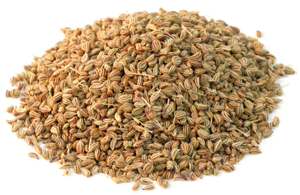

Blog

  • Tricholepis angustifolia DC.

    Tricholepis angustifolia DC
    price
    Bengali Name : Siyal Kanta
    English Name : Camel’s Thistle
    German Name : Til Kanto
    Hindi Name : Brahm Dandi, Untakatara
    Latin name : Tricholepis angustifolia DC.
    Sanskrit Name : Ajadandi, Brahmadandi, Kantapatraphala
    Urdu Name : Brahm Dandi

    Description : It is alterative, aphrodisiac, aromatic, bitter, diuretic and a nerve tonic. Useful in blood impurities like itch, boils, pimples and skin disorders. Also useful in spermatorrhoea and nocturnal emission.

    Recommended Dosage : 5 to 7 g powder of dried herb.

    Contraindication : This herb is not recommended during pregnancy or lactation.

    Siyal Kanta Camels Thistle Til Kanto Brahm Dandi Untakatara Tricholepis angustifolia DC Ajadandi Brahmadandi Kantapatraphala Brahm Dandi
  • Tribulus terrestris Linn.

    Tribulus terrestris Linn
    price

    Arabic Name : Hasak, Dareesa, Shirsheer, Hummos al-ameer
    Bengali Name : Gokshur, Gokhuri
    Chinese Name : Bai ji li, Tu chi li
    English Name : Small Caltrops, Land Caltrops, Puncture Vine, Goathead
    French Name : Croix-de-Malte
    German Name : Burzeldorn
    Gujarati Name : Methogokharu, Nhane Gokharu, Betha Ghokaru
    Hindi Name : Gokhru, Chota Gokhru
    Kannada Name : Senna Negalu, Negalamullu, Negalu
    Kashmiri Name : Michirkand, Pakhda
    Latin name : Tribulus terrestris Linn.
    Marathi Name : Sarate, Kate Gokharu
    Persian Name : Khare Khasak Khurd, Kharsah Goshah
    Punjabi Name : Makhar, Gokhru
    Sanskrit Name : Gokshura
    Urdu Name : Gokhru Khurd

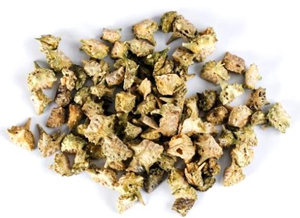
    Tribulus Terrestris (Gokhru Khurd), an Ayurvedic herb, is commonly known as Gokshur. This herb is most commonly used as an aphrodisiac, for urinary genital support, and sometimes, even for body building purpose.

    It functions as a potent herb for enhancing low libido. Gokhru Khurd herbal extract do not contain hormones, but induces the synthesis of hormone like Luteinizing Hormones (LH) and Testosterones.

    Gokhru Khurd has been widely used for sexual dysfunction in both; males and females. In China and India, the herb Tribulus terrestris has been touted as liver, kidney, urinary, and cardiovascular remedies. In Ayurvedic science, the herb is considered to be a general health tonic and urinary tract disinfectant.

    Benefits of Gokhru Khurd :

    • Helps to improve sex drive
    • Helps to improve sperm count
    • Helps to enhance penile erection
    • Helps to prevent urogenital infections
    • Helps to boost stamina for sustaining sexual functions

    Recommended Dosage : 5 to 7 g powder of dried fruits.

    Contraindication : This herb has no known warnings or contraindications, but should probably be avoided by pregnant or lactating women.

    Kummun al-malik Ajowan Jowan Omum Ajowan Ajowan Ajowan Ajma Ajmo Ajwain Oma Javend Trachyspermum ammi Sprague Yavani Ajwain Desi
  • Trapa bispinosa Roxb.

    Trapa bispinosa Roxb
    price
    Bengali Name : Paniphal, Singhade, Jalfal
    English Name : Indian Water Chestnut, Indian Caltrop
    French Name : Noix aquatique Corniole
    German Name : Wassernuss, Wasserkastanie
    Gujarati Name : Shingoda, Singoda
    Hindi Name : Singhara, Singhada
    Latin name : Trapa bispinosa Roxb.
    Marathi Name : Shingoda
    Punjabi Name : Singhade, Gaunaree
    Sanskrit Name : Sringataka, Jalaphala
    Urdu Name : Singhara

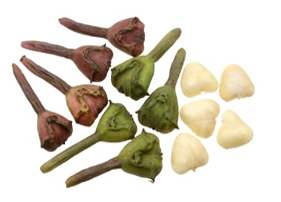
    Description : The fruit is antipyretic, appetiser, aphrodisiac, astringent, constipating, cooling, diuretic, haemostatic, nutritive, sweet and tonic. Rich in calcium and is useful in general debility, attenuated semen, oligospermia and sexual debility. Also useful in leucorrhiea, diarrhoea, dysentery, intermittent fevers, haemorrhages, haemoptysis, fatigue, erectile dysfunction, dysuria, polyuria and other urinary disorders.

    Recommended Dosage : 5 to 10 g powder of dried fruit.

    Contraindication : This fruit has no known warnings or contraindications.

    Paniphal Singhade Jalfal Indian Water Chestnut Wassernuss Shingoda Singhara Trapa bispinosa Roxb Shingoda Singhade Gaunaree Sringataka Singhara
  • Trachyspermum ammi Sprague.

    Trachyspermum ammi Sprague
    price
    Arabic Name : Kummun al-malik, Nanakhwah, Ajwayn
    Bengali Name : Ajowan, Jowan, Yavani, Yamani
    Chinese Name : Yin du zang, Hui xiang
    English Name : Bishop’s Weed, Omum, Ajowan, Lovage
    French Name : Ajowan, Ammi
    German Name : Ajowan, Indischer Kümmel
    Gujarati Name : Ajma, Ajmo, Yavan, Javain
    Hindi Name : Ajwain, Ajwayan
    Kannada Name : Oma, Yom, Omu
    Kashmiri Name : Javend
    Latin name : Trachyspermum ammi Sprague.
    Marathi Name : Onwa, Onba
    Persian Name : Nankhwah, Zeniyan
    Punjabi Name : Jawain
    Sanskrit Name : Yavani, Yavanika
    Urdu Name : Ajwain Desi (Seeds), Sat Ajwain (Thymol)

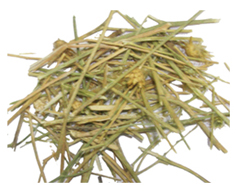
    Description : The seeds possess antifungal, antimicrobial, antiseptic, antispasmodic, aromatic, bitter, carminative, diaphoretic, digestive, diuretic, expectorant, stimulant, stomachic and tonic. They are used in respiratory disorders. It is useful in chest congestion occurring due to accumulated cough. In conditions like whooping cough and asthmatic bronchitis it is used alongside the main line of treatment. The seeds can be taken orally and/or used externally for fomentation of the respiratory area. They have proven their effectiveness in common conditions like rhinitis, sinusitis, pharyngitis, laryngitis, bronchitis, etc.

    The volatile oil (Thymol) and the seeds are useful in flatulence, indigestion, colic, diarrhoea, cholera, hysteria and spasmodic affections of the bowels and checks chronic discharges such as profuse expectoration in bronchitis. Relieves muscle spasms.

    Recommended Dosage : Seeds :- 3 to 6 g powder; Thymol : 30 mg to 120 mg

    Contraindication : This herb is not recommended during pregnancy or lactation.
    Kummun al-malik Ajowan Jowan Omum Ajowan Ajowan Ajowan Ajma Ajmo Ajwain Oma Javend Trachyspermum ammi Sprague Yavani Ajwain Desi
  • Tinospora cordifolia Miers

    Tinospora cordifolia Miers
    price
    Arabic Name : Gilo
    Bengali Name : Gulanch, Gilo, Gadanch, Ningilo
    Chinese Name : Kuan chu hsing, Xin ye qing niu dan
    English Name : Moon Creeper, Heart-Leaved Moonseed, Indian Quinine
    French Name : Plante grimpante de lune
    German Name : Mond-Kriechpflanze
    Gujarati Name : Gado, Galo, Gulo, Gulwel
    Hindi Name : Giloe, Gulancha, Giloy
    Kannada Name : Amrutaballi, Uganiballi
    Kashmiri Name : Amrita, Gilo
    Latin name : Tinospora cordifolia Miers
    Marathi Name : Gulvel, Giroli
    Persian Name : Gulbel
    Punjabi Name : Gilo
    Sanskrit Name : Guduchi, Madhparni, Amrita, Soma-valli
    Urdu Name : Gilo

    Description : Gilo is used to improve the immune system and the body’s resistance to infections. It is also an effective immuno-stimulant. The plant is also used in dyspepsia, and various types of fever.
    Gilo helps increase the effectiveness of protective white blood cells and helps in building the body’s own defense mechanism (immune system).

    Other Benefits Of Tinospora cordifolia Miers (Gilo)

    • Gilo possesses antiseptic and analgesic properties. It is used in common skin conditions and gout.
    • Gilo is quite useful in thirst, vomiting, loss of appetite, abdominal pain, liver disorders, jaundice, acid-peptic disorder, dysentery, sprue and worms.
    • Gilo is effective in cardiac debility, blood, disorders, rheumatoid arthritis, splenomegaly, gout and anemia.
    • Because of its Snigdha Guna and Madhura Vipaka; Guyduchi is also a very good aphrodisiac.
    • Gilo benefits a lot in prameha – urinary insufficiencies specially diabetes and other disorders of urinary bladder.
    • Gilo is used in chronic fever and typhoid fever.
    • Gilo reduces burning, normalizes temperature, improves appetite and increases the strength.

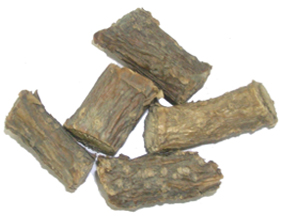
    Recommended Dosage : 5 to 10 g powder of stem; 500 mg to 2 g of extract.

    Contraindication : This herb has no known warnings or contraindications.

    Gilo Gulanch Moon Creeper Indian Quinine Mond-Kriechpflanze Gado Gulwel Giloe Amrutaballi Amrita Tinospora cordifolia Miers Gulvel Gulbel Guduchi Gilo
  • Terminalia chebula Retz.

    erminalia chebula Retz
    price
    Arabic Name : Haleelaj, Ahleelaj, Ihleelaj
    Bengali Name : Haritaki, Hora
    Chinese Name : He zi
    English Name : Chebulic Myrobalan
    French Name : Bad amier Chébule, Myrobalan chébule
    German Name : Chebulische Myrobalane
    Gujarati Name : Hirdo, Himaja, Pilo-Harda, Hardo
    Hindi Name : Harad, Har
    Kannada Name : Anelekai, Har
    Kashmiri Name : Halela
    Latin name : Terminalia chebula Retz.
    Marathi Name : Hirda, Haritaki, Harda, Hireda
    Persian Name : Halela
    Punjabi Name : Halela, Harar, Haser
    Sanskrit Name : Haritaki
    Urdu Name : Halela

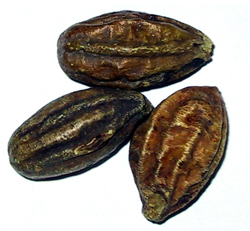
    Description : Halela would be extremely useful for your chronic acidity problem. These are matchless in revitalizing healthy digestive system and could successfully get you relief from acidity. These herbal products are purely natural, completely free of any side effects, and extremely easy to use.

    Benefits of Halela :

    • The herb Haritaki (Halela) has following health benefits – Important Health Benefits of Haritaki
      The herb has rejuvenative, laxative, astringent, purgative and dry properties.
    • Paste made from the herb is effective in healing process of the wounds and ulcers. It also reduces swelling and acts as a cleanser.
    • The herb relieves the eyelids in conjunctivitis.
    • Regular gargling with the herb’s decoction helps in oral ulcers, sore throat and stomatitis.
    • It acts as an active astringent and relieves bleeding and loose gums and also gums ulceration.
    • It is also the main ingredient in Triphala, which is used to treat bleeding gums, hair wash and cleaning tooth in pyorrhea.
    • Several gastrointestinal ailments such as ascites, tumors, enlargement of liver-spleen, piles, colitis and intestinal worms can be treated.
    • The herb is a memory enhancer and is salutary in urinary stones and dysuria.
    • The herb is effective in digestion and improves appetite.
    • The herb has astringent and anti-inflammatory properties, it is beneficial in vaginal discharges such as leucorrhea and urethral discharges such as spermatorrhea.

    Recommended Dosage : 3 to 6 g powder of dried mature fruits.

    Contraindication : The fruit has no known warnings or contraindications.

    Haleelaj Ahleelaj Haritaki He zi Chebulic Myrobalan Chebulische Myrobalane Hirdo Himaja Harad Anelekai Halela Terminalia chebula Retz Hirda Haritaki Halela Haser Haritaki Halela
  • Terminalia belerica Roxb.

    Terminalia belerica Roxb
    price
    Arabic Name : Baleej
    Bengali Name : Bayada, Baheda
    English Name : Belleric Myrobalan
    German Name : Belerische Myrobalane
    Gujarati Name : Veheda, Beda
    Hindi Name : Bahera, Baheda
    Kannada Name : Tarekai, Tode
    Kashmiri Name : Babelo, Balali
    Latin name : Terminalia belerica Roxb.
    Marathi Name : Behda, Behada, Bahela
    Persian Name : Balelaj
    Punjabi Name : Bahera, Bayrah
    Sanskrit Name : Bibhitaki, Vibhitaki, Karshaphala, Kalidruma
    Urdu Name : Bahera, Balela

    Description : The fruit possesses myocardial depressive activity. It is anthelmintic, antibacterial, antiseptic, astringent, digestive, expectorant, laxative, lithotriptic, rejuvenative, stomachic and tonic. It is used in coughs, bronchitis, sore throat and hoarseness. Its pulp is used in oedema, piles and diarrhoea. It is also useful in biliousness, leprosy, fever, hair care and weakness of eyesight.

    Recommended Dosage : 3 to 6 g powder of dried ripe fruit.

    Contraindication : The fruit has no known warnings or contraindications.

    Baleej Bayada Belleric Myrobalan Belerische Myrobalane Veheda Beda Bahera Tarekai Babelo Terminalia belerica Roxb Behda Behada Balelaj Bahera Bibhitaki Balela
  • Terminalia arjuna Roxb.

    Terminalia arjuna Roxb
    price
    Bengali Name : Arjun Gach
    Chinese Name : San guo mu
    English Name : Arjuna Myrobalan, White Murdah
    German Name : Arjunbaum
    Gujarati Name : Arjun
    Hindi Name : Arjuna, Koha
    Kannada Name : Matri
    Latin name : Terminalia arjuna Roxb.
    Marathi Name : Arjun, Arjun Sadra
    Punjabi Name : Arjon
    Sanskrit Name : Arjuna, Kukubha
    Urdu Name : Arjun

    The bark of Arjun tree is researched as an anti-ischemic and cardio protective agent useful in hypertension and ischemic heart disease.
    A unique herb that helps maintains a healthy heart and reduces the effects of stress and nervousness. Arjun promotes effective cardiac functioning and regulates blood pressure. It improves the blood circulation to the heart and also tones the heart.

    Benefits of Arjun :

    • Arjun relieves hypertension (High blood pressure).
    • Arjun reduces the effects of stress and nervousness on the heart.
    • Arjun possesses diuretic and a general tonic outcome in cases of liver cirrhosis.
    • Arjuna or Arjun has prostaglandin enhancing and coronary threat modulating properties.
    • Arjun promotes effective cardiac performance by regulating blood pressure and cholesterol levels.
    • Arjun lowers beta-lipoprotein lipids and the revival of High Density Lipoprotein mechanism in hyperlipidemia.
    • Arjun enhances the taking away of cholesterol by accelerating the turnover of LDL or low density lipoprotein cholesterol in the liver.

    Recommended Dosage : 3 to 6 g powder of bark.

    Contraindication : This herb has no known warnings or contraindications.

    Arjun Gach Arjuna Myrobalan White Murdah Arjunbaum Arjun Arjuna Koha Matri Terminalia arjuna Roxb Arjun Arjon Arjuna Kukubha
  • Tephrosia purpurea Pers.

    Tephrosia purpurea Pers
    price
    Arabic Name : Sarboka
    Bengali Name : Bannilgach, Bonnil
    Chinese Name : Nah troi
    English Name : Purple Tephrosia, Wild Indigo
    French Name : Indigotier Sauvage
    German Name : Wilder Indigo
    Gujarati Name : Sharpankho, Jhila, Ghila
    Hindi Name : Sarphenka, Sarphankha
    Kannada Name : Panki, Kaggi
    Latin name : Tephrosia purpurea Pers.
    Marathi Name : Untoali, Unhali, Surpanaka
    Persian Name : Sufar
    Punjabi Name : Jhojru
    Sanskrit Name : Puleehashtree, Sarapunkha, Sharpunkha, Neelabralakrati
    Urdu Name : Sarphoka

    Description : The root is acrid, alterative, anthelmintic, antipyretic, astringent, bitter, depurative, digestive, diuretic and laxative. This plant alone, or in combination with other agents, has been reputed as a very efficient remedy in syphilis, boils, pimples, abscesses especially carbuncles on the back, as tonic and laxative, and as purifier of blood.

    Recommended Dosage : 3 to 5 g powder of dried root.

    Contraindication : This herb is not recommended during pregnancy or lactation.

    Sarboka Bannilgach Purple Tephrosia Indigotier Sauvage Wilder Indigo Sharpankho Sarphenka Panki Tephrosia purpurea Pers Untoali Sufar Jhojru Puleehashtree Sarphoka
  • Taxus baccata Linn.

    price
    Arabic Name : Talisfar, Zarnab
    Bengali Name : Birmi, Talish Patr, Bhada Getela
    Chinese Name : Tzu shan
    English Name : Yew, Common Yew, Chinwood
    French Name : If commun
    German Name : Eibe, Eife, Ibenbaum, Kantelbaum, Taxbaum, Ybe
    Gujarati Name : Gethela Barmi
    Hindi Name : Talispatr, Talis Patta
    Taxus baccata Linn
    Kannada Name : Sthauneyak
    Kashmiri Name : Badar, Budul
    Latin name : Taxus baccata Linn.
    Marathi Name : Sthauney Barmi
    Persian Name : Zarnab
    Punjabi Name : Birmi
    Sanskrit Name : Mandhuparni, Talispatra, Sukapuspa
    Urdu Name : Zarnab

    Description :Zarnab is used as anti-arthritic & anti-diabetic agent. It reduces inflammation and rejuvenates the body. It is also an anti –helminthic, antipyretic, blood purifier and anti-inflammatory. It is very helpful in building up natural protection against various diseases. It is often used to fight against general debility & dyspepsia due to hyperglycemia. This herbal medication is stomachic and diuretic in nature which effectively stimulates the secretion of bile juices, relieves thirst, burning sensation, vomiting tendencies and jaundice.

    Externally, used in the treatment of rheumatism.

    Recommended Dosage : 1 to 3 g powder of dried leaves.

    Contraindication : This herb is not recommended during pregnancy and lactation. Large doses (many times the recommended disage) may result in colic, dry mouth, hypotention, paleness, rash, syncopem vertigo and vomiting.

    Talisfar Birmi Tzu shan Yew If commun Eibe Eife Ibenbaum Gethela Barmi Talispatr Taxus baccata Linn Sthauneyak Badar Budul Sthauney Barmi Zarnab Mandhuparni